
Acupuncture, practised in Central Asia and China for about 3,000 years, is the best-known Traditional and Complementary Medicine practice. It is a scientifically proven method whose indications have been defined by the World Health Organization (WHO), and it is widely used around the world, particularly in the United States and Europe.
The year 1998 marks the first publication in a scientific journal of the positive effects of acupuncture on postoperative, chemotherapy-induced and pregnancy-related nausea and vomiting, pain after dental surgery, drug and nicotine addiction, stroke rehabilitation, migraine and similar headaches, pain related to the menstrual cycle, fibromyalgia, myofascial pain, osteoarthritis, low back and neck pain, carpal tunnel syndrome, asthma and similar chronic obstructive respiratory diseases, excessive appetite and obesity.
The World Health Organization (WHO) has defined 40 different indications for acupuncture. For example, acupuncture has an important place in the comprehensive treatment programme for excessive appetite and obesity, organised together with the endocrinology, psychiatry and diet outpatient clinics.
In Türkiye, the Acupuncture High Commission was established at the end of the 1980s under the Ministry of Health's General Directorate of Treatment Services. The Acupuncture Treatment Regulation was published in the Official Gazette No. 20885 of 29 May 1991. Its purpose is to set out the principles and procedures for practising acupuncture in Türkiye using scientific methods. The regulation and the Acupuncture High Commission established that, within the borders of the Republic of Türkiye, acupuncture may be performed in public and private hospitals, outpatient clinics and private practices by physicians and dentists who have received acupuncture training and hold a practice certificate.
Eleven years later, on 17 September 2002, a new regulation in line with current developments was published in the Official Gazette No. 24879. The Acupuncture Science Commission was established and attached to the General Directorate of Primary Health Care Services. In 2004 a circular was issued setting out the conditions under which acupuncture may be practised in private healthcare institutions. The Acupuncture Science Commission set the standards for acupuncture practice in Türkiye. It decided that acupuncture may be applied for the indications defined by the WHO, and that it may not be applied to patients with a definite indication for surgical treatment or to patients with cancer or an infectious disease.
The Ministry of Health's most recent regulation on this subject, dated 27 October 2014, set out the defining details that allow our patients to benefit from Traditional and Complementary Medicine practices as a whole, acupuncture in particular.
Acupuncture treatment is based on stimulating defined acupuncture points. Classically, stimulation is given with needles made of stainless steel. As these very fine, sterile, single-use needles are inserted into the body, the patient may feel a very slight pain but no significant discomfort. The needles are then stimulated every few minutes by turning them back and forth or by inserting them slightly further and withdrawing them. During this time the patient perceives a sensation at the needle site described as tension, fullness or heaviness. This sensation is a desired effect, but it is not really a feeling of pain or burning. After the needles are inserted, electrical stimulation may be applied to them to strengthen the effect; this is called electroacupuncture.
In ear acupuncture, the ear points are first located with a detector and stimulated electrically; treatment can then be applied by inserting 1.5–2 mm needles into the auricle, which is called auriculotherapy. The person may feel a little pain only at the moment the needle pierces the skin; this soon passes, and within a few hours the person even forgets there is a needle in the ear, feeling pain only when touching or accidentally bumping the ear or lying on it. The ear needles stay in the ear with their adhesive plaster throughout the treatment; you can take a shower or go swimming without any problem. A needle that causes too much discomfort can be removed early. Auriculotherapy is especially prominent in the French–German–Austrian school.
Laser acupuncture can be used for children and for people who are very afraid of needles. Instead of the classical method, the same acupuncture points can be stimulated with red laser light at a wavelength of 830 nm for 15–20 seconds per point. The literature contains scientific publications and studies showing that it is as effective as classical needle acupuncture.
Depending on the school of acupuncture, it can be applied to different parts of the body. Body acupuncture is applied to acupuncture points whose locations are defined and which exist all over the body. These points lie on channels called meridians. Fourteen regular meridians as well as extra meridians have been defined in the body. There are 361 defined acupuncture points, plus special points known as extra points. Qi, the life energy described by this traditional method, circulates along the meridians. Each point has its own name, and the organs or systems it affects have been determined through experience. A combination is therefore formed from the points shown by experience to be beneficial for the patient's condition. Some points are used frequently, while others are equivalent substitutes for one another and can be used in turn. Needles can also be inserted in different ways depending on the school. For example, the Japanese school and the methods developed in Europe insert the needles only into the skin, considering a depth of 1–2 mm sufficient, whereas the Chinese school calls for inserting them into deeper tissues. Risky points are identified and the needling technique is adjusted accordingly; deep insertion must be avoided in certain areas. With a knowledgeable physician, the risk of complications is practically nil.
Acupuncture has a very wide range of applications. Articles from the Far East have published study results reporting successful outcomes with acupuncture in a great variety of indications, both in current practice and for experimental purposes. In the Western world, including the United States and European countries, studies have also compared acupuncture with conventional treatment methods in many different diseases. More than 15,000 research articles investigating the effect of acupuncture and highlighting its positive and negative aspects have been published in the world literature to date.
In Türkiye and around the world, the medical community includes both supporters and strong opponents of acupuncture. Some members of the medical profession claim that the effect of acupuncture is purely psychological and has no organic basis. Various research articles supporting this view also exist in the world literature. Some randomised controlled clinical trials have concluded that acupuncture is as effective as a placebo and no more. In this context, even patients' genotypes have been examined to analyse the effectiveness of electroacupuncture (to understand why positive effects do not appear in some patients).
On the other hand, clinical experience has shown that acupuncture is useful in a wide variety of indications and makes a meaningful contribution to resolving certain conditions. Considerable effort is therefore being made to analyse these positive effects and to demonstrate their reproducibility by performing the same procedures in different centres. For example, acupuncture stimulation is thought to stimulate the neurotransmitters that trigger the production of gonadotropin-releasing hormone, and through this mechanism to regulate the menstrual cycle and ovulation. Similarly, study results have been published showing that acupuncture increases blood flow to the uterus, stimulates the production of endogenous opioids, relaxes the body and thereby significantly raises the success rate of infertility treatment.
In addition, research fully compliant with scientific standards is being carried out in animal experiments, examining even very specialised questions such as the electrophysiological changes caused by acupuncture stimulation. Topics as diverse as the stimulating effect of electroacupuncture on the formation of new blood vessels, and how and through which mechanisms an analgesic effect arises from stimulating acupuncture points, are being studied in animal experiments.
Work continues in particular on improving the quality of acupuncture research and on conducting more studies that follow scientific rules to Western standards. Some patients with certain diseases are given drug treatment, others receive acupuncture, and a group of patients receives sham acupuncture, and the results are compared. Such studies have been carried out, for example, in patients with headache, low back and back pain, knee pain and allergic complaints. The effect of acupuncture has been found to be equivalent to the therapeutic effect of drugs, and sometimes to give more positive results.
Our Acupuncture Unit, modelled on leading medical centres abroad and established to develop and deliver acupuncture through both animal experiments in experimental research centres and controlled studies in university and research hospitals that follow scientific rules, are approved by ethics committees and do not put patients' health at risk, opened on 1 October 2014 to serve our patients.
Our doctors
Fatma Sarıcaoğlu
Anesthesiology and Reanimation · Adult Hospital
Algology Orthopeadic Anaesthesia, Regional Anesthesia Acupuncture…
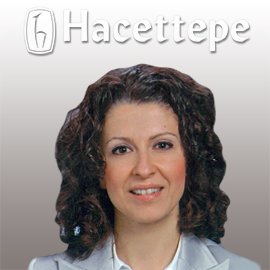
Özgür Canbay
Anesthesiology and Reanimation · Adult Hospital
Difficult Airway Management, Anestesia for Cranifacial Surgery…

Ayşegül Fırat
Acupuncture · Adult Hospital
Microscopic and Macroscopic Anatomy, Neuroanatomy, Acupuncture and…
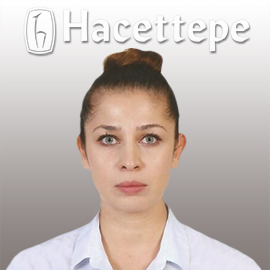
Ceren Günenç Beşer
Acupuncture · Adult Hospital
Makroskopik anatomi, diseksiyon, radyolojik anatomi, ortopedik…